Gemma 4 Is Incredible. Now Imagine If It Could Evolve.
Google shipped the best open foundation model yet. Apache 2.0. 31B dense. Frontier benchmarks. Runs locally. But after your 1,000th query — has it learned anything from you?
Google Shipped Something Real
Google DeepMind dropped Gemma 4 on April 2, 2026, and the open-weights world is rightfully buzzing.
This is not another incremental release. It is the first time a true frontier-class model family ships under the full Apache 2.0 license — no custom restrictions, no usage caps, no "you can use it but don't compete with us" clauses. Four models: the edge-optimized E2B and E4B that run on phones and Raspberry Pis, the 26B Mixture-of-Experts for low-latency work, and the 31B dense flagship that landed at #3 on the Arena AI text leaderboard with an ELO of approximately 1452.
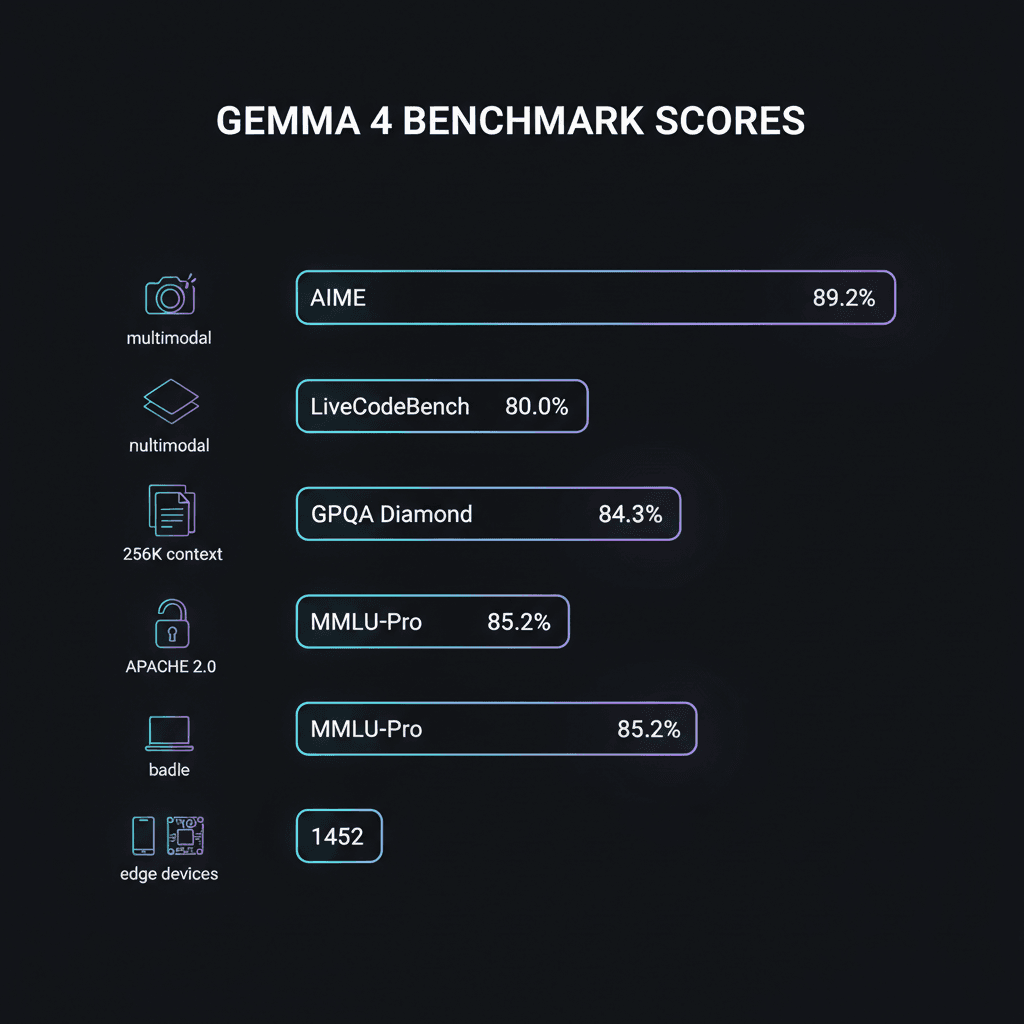
The numbers are real. GPQA Diamond: 84.3%. AIME 2026 math: 89.2%. LiveCodeBench coding: 80.0%. Codeforces ELO: 2150. MMLU-Pro: 85.2%. Native multimodal input — text, image, and audio on the smaller variants. Up to 256K context on the larger ones. 140+ languages out of the box. Built-in agentic capabilities: function calling, tool use, multi-step planning, and configurable thinking modes.
You can run the 31B model quantized on a single consumer GPU. The E2B variant hits 133 tokens/sec prefill on a Raspberry Pi 5. Offline. Private. Yours.
Respect where it is due: Google executed.
The Apache 2.0 Moment
Previous Gemma releases used a more restrictive license that limited commercial modification. Apache 2.0 changes the game. Developers have already downloaded earlier Gemma models over 400 million times and created more than 100,000 variants. With Gemma 4, those variants can now be legally forked, merged, and redistributed at the weight level.
Google took the research that powers Gemini 3, distilled it into open models that actually run where people live, and removed every legal barrier they could. The 31B model is not pretending to compete with 405B monsters on paper — it is beating them in practice on real hardware.
That is impressive engineering.
The One Question No One Is Asking
But after the excitement of the first download, after the novelty of running a model this capable locally, a quieter question arrives.
After your 1,000th query — has it learned anything from you?
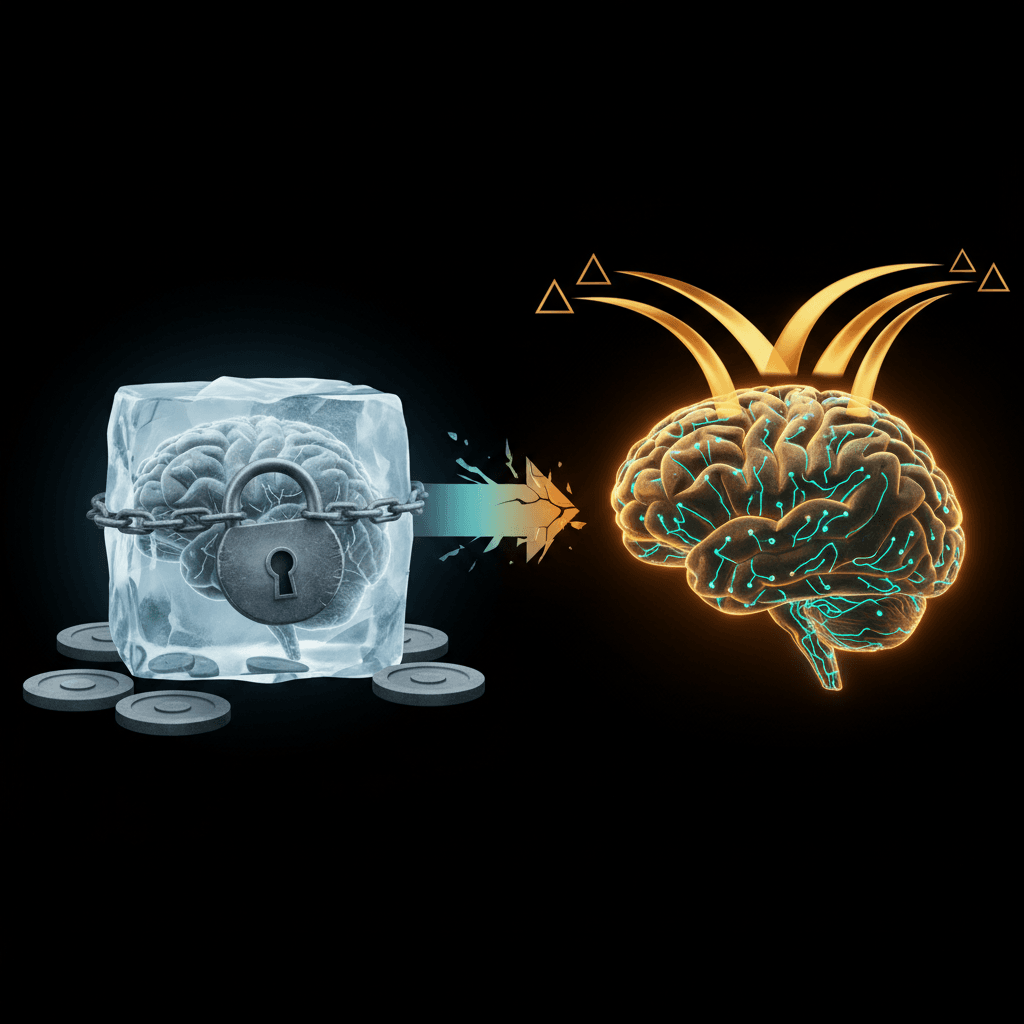
Run Gemma 4 for a week on your codebase. Feed it your research papers. Let it debug, write docs, analyze patient notes, review legal filings. It will be brilliant every single time. Then close the session. Re-open it tomorrow. The weights are identical to the moment you first downloaded them. The model is exactly as smart — or exactly as generic — as it was on day one.
It remembers nothing. It owns nothing. It evolves zero.
That is not a knock on Gemma 4. That is the frozen-weight paradigm. Every major model family today — Gemma, Llama, Qwen — ships with weights locked the instant training ends. Context windows try to paper over the amnesia. RAG bolts on external knowledge. Both are workarounds. Neither changes the model itself.
What Evolution Would Look Like
Now imagine the same 31B Gemma 4, but after you point it at your entire private codebase. Or your firm's 80 years of case law. Or your clinic's de-identified patient histories.
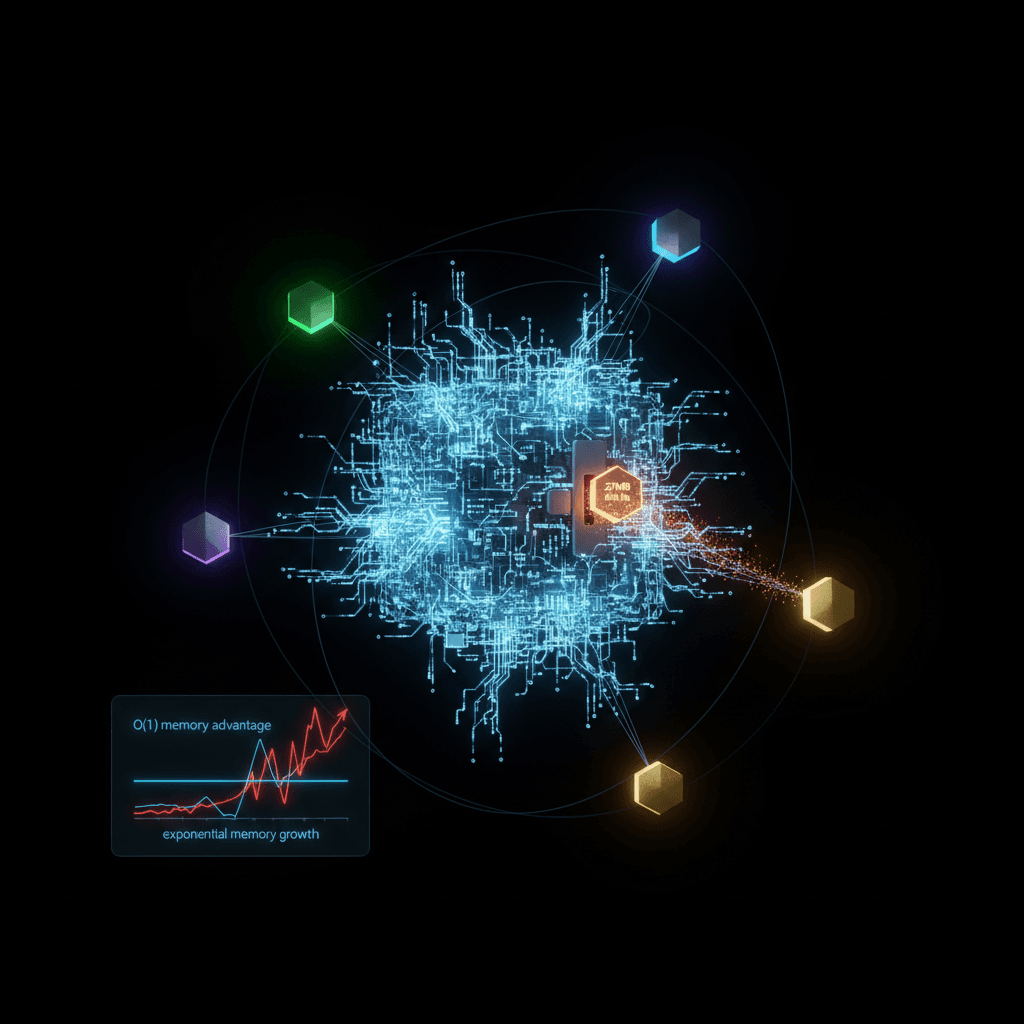
A small, architecture-agnostic process — micro-TTT — compresses that domain knowledge into permanent neural weight deltas. A single 27 MB file. Less than five milliseconds to hot-swap.
The model does not just retrieve your data. It absorbs it. The facts, the patterns, the reasoning style, the edge cases — all become part of its native weights. Ask it the same question tomorrow and the answer is sharper, deeper, contextually richer. Because the weights themselves have evolved.
We have measured what this looks like in practice. On domain-specific recall, a single delta file delivers a 75.8% drop in perplexity. Factual accuracy jumps 17% over GPT-4o + RAG in head-to-head tests. General capabilities show zero regression. Inference stays O(1) constant time and constant VRAM, even after the model has internalized millions of tokens. No quadratic context blow-up. No retrieval latency.
The deltas are portable. Swap a legal expert file for a medical one in five milliseconds and the same base model becomes a specialist in either domain — or both simultaneously, with per-token routing deciding which expert handles each piece of the response.
Why This Matters Now

Because the license is Apache 2.0, this is now legally possible for the first time at frontier scale. You can take Gemma 4, evolve the weights with your own data, and ship the resulting model to your team, your clients, or your customers. The deltas belong to you. The knowledge stays on your hardware. No US CLOUD Act. No exfiltration risk. Sovereign by design.
This is what we built at MaiMind. Not a bigger transformer. Not another RAG wrapper. A new layer on top of the transformer that lets any open model — Gemma 4 included — learn after deployment and remember forever. The architecture is model-family agnostic. We have validated it across dense and MoE families. The patent application covers 16 novel claims for the core mechanisms that make test-time weight evolution stable, efficient, and non-destructive to general intelligence.
Think about what this unlocks for Indian developers, enterprises, and researchers. Your internal wiki, your proprietary algorithms, your regional-language datasets, your defense specs — none of it has to live in someone else's cloud anymore. It becomes part of the model you run locally or air-gapped.
The Next Layer
Gemma 4 is the best static foundation the open world has ever had.
Evolution is the next layer.
The frozen era was necessary. It gave us models powerful enough to be worth evolving. Google just handed us the best one yet, with the license that finally lets us take the next step without asking permission.
Now the question is not whether the base model is incredible. It is what your version of it will become once it is allowed to grow.
TRANSMIT YOUR SIGNAL
You have reached the end of this transmission.
M.A.I. is still learning.